Mindfulness
Beginner's Guide to Buddhist Meditation (Zen, Vipassana, Metta, etc.)
It was a rainy afternoon in Kyoto. In a small wooden temple, a group of curious beginners gathered, eyes bright with questions. Among them was Emma, a young professional on the verge of burnout. She had tried every productivity hack and self-help trick, yet her mind never seemed to rest. That day, she sat cross-legged on a simple cushion, listening to a gentle monk. With a smile, he whispered, "We begin again with every breath."
This is the true starting point of Buddhist meditation—no fancy gear, no mystical secrets. Just a willingness to meet yourself, right here, right now. Let's demystify the basics and explore the most popular Buddhist meditation practices: Zen, Vipassana, Metta (Loving-Kindness), and more. Whether you're searching for peace, clarity, or just a way to feel a little more at home in your own mind, you're in the right place.
Why Buddhist Meditation?
In today's whirlwind of distractions, Buddhist meditation offers an anchor. It's not about emptying your mind, but learning to watch your thoughts like clouds drifting across the sky. Scientific studies confirm what practitioners have known for centuries: these simple practices can lower stress, boost emotional resilience, and even rewire the brain for more compassion and focus.
But beyond the science, meditation is an invitation to presence—a space where you can just be. No need to be perfect, productive, or enlightened. Just human.
The Main Practices
1. Zen Meditation (Zazen): The Art of Sitting
Zen is simplicity itself. In Zazen, you sit with a straight back, hands folded gently, eyes half-open. There's no mantra or visualization—just attention to the breath, the posture, the moment. When thoughts come, as they will, you acknowledge them and return to your breath. Over time, this practice cultivates calm, clarity, and a sense of grounded presence.
Imagine yourself by a quiet pond. When you stop stirring the water, the mud settles, and the surface reflects the sky. That's the spirit of Zazen.
2. Vipassana: Insight Through Mindful Awareness
Vipassana, or "clear seeing," is the heart of mindfulness meditation. Instead of focusing on a single object, you observe everything: the rise and fall of the breath, bodily sensations, thoughts, and emotions. The goal is not to judge or change your experience, but to see it clearly, just as it is.
Each sensation becomes a teacher. The itch on your nose, the urge to move—each moment invites you to return, to notice, to learn.
3. Metta (Loving-Kindness) Meditation: Cultivating Compassion
If you've ever wished for a way to soften your heart, Metta is your friend. In this practice, you silently repeat phrases like, "May I be happy. May I be safe. May I be well." Then, you extend these wishes to others: loved ones, strangers, even those you find difficult. Research shows that Metta can boost feelings of connection and empathy, dissolving the invisible walls that separate us.
Imagine your goodwill rippling out like waves, touching everyone you meet, even yourself.
How to Start (Even If You're Restless)
- Find a Quiet Spot – You don't need a temple. A chair in your bedroom will do.
- Set a Timer – Even five minutes can be enough.
- Choose Your Practice – Zen for calm, Vipassana for clarity, Metta for warmth.
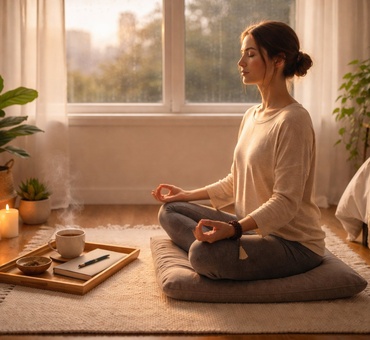
- Sit Comfortably – Straight spine, relaxed shoulders, hands resting naturally.
- Breathe and Notice – Follow your chosen technique, gently bringing your attention back when it wanders.
- Be Kind to Yourself – Wandering mind? It's normal! Each return is a victory.
Common Questions
Do I need a teacher? While guidance helps, many start with apps, books, or guided audios. Over time, connecting with a community (online or offline) can deepen your journey.
What if I get bored or frustrated? That's part of the path! Notice the feeling, breathe, and gently continue. Each emotion is a new opportunity to practice presence.
Is it religious? Buddhist meditation is open to all, regardless of belief. The focus is on experience, not dogma.
Conclusion: Every Breath, a New Beginning
Emma left that temple with no grand revelation—just a subtle, steady calm. She still had deadlines and worries. But now, she carried a simple tool: one breath, one moment at a time.
You don't have to go to Japan or become a monk. Buddhist meditation is an open door, waiting in your living room, on your lunch break, even in the chaos of a busy street. The journey starts wherever you are. Sit down. Notice the breath. Begin again.